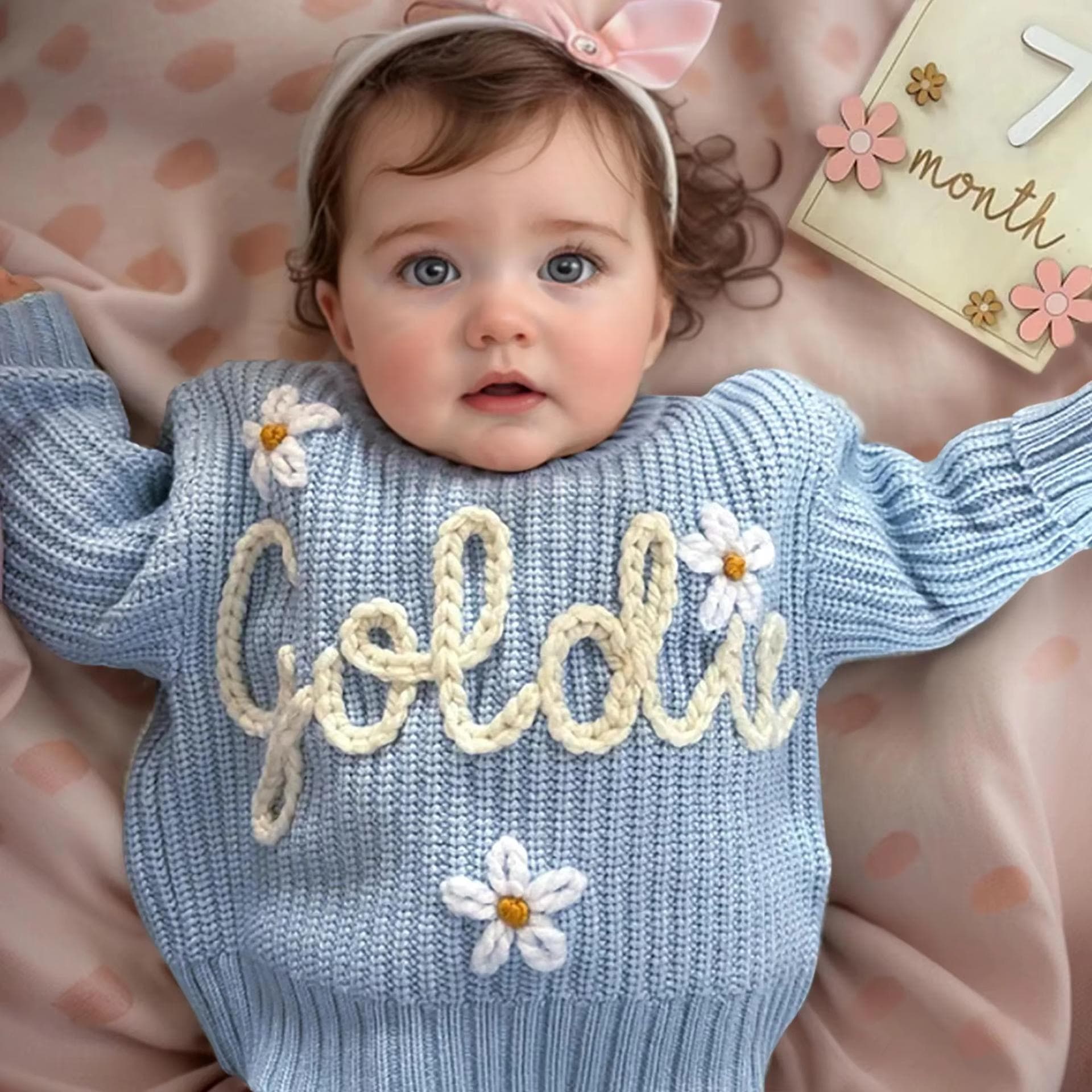
For babies with sensitive skin or eczema, 100% combed cotton is clinically safer, softer, and more breathable than wool. While superfine Merino wool offers natural warmth, traditional wool fibers feature microscopic surface barbs and residual sheep lanolin that trigger micro-friction and severe flare-ups. Combed cotton provides ultra-smooth cylindrical fibers with zero prickle factor, allowing delicate newborn skin to breathe freely without chafing.
Few things in parenthood are as heart-melting as dressing your baby in a cozy, chunky knit sweater. Whether you are planning a memorable newborn birth announcement photoshoot, bundling them up for a crisp autumn stroll, or looking for the perfect personalized keepsake gift, knitwear brings timeless warmth and charm that mass-produced cotton onesies simply cannot match.
However, if your baby has delicate newborn skin, red patches, or diagnosed atopic dermatitis (infant eczema), choosing the wrong knitwear can turn a joyful moment into hours of crying, scratching, and irritated hives. Anxious parents frequently ask our studio: Is wool safe for babies? Can a baby with eczema wear knitwear? What is the absolute safest yarn for newborn sensitive skin?
In this comprehensive fabric science guide, we break down the clinical differences between cotton and wool, examine how fiber diameter (microns) impacts the skin barrier, reveal why pediatric dermatologists consider combed cotton the gold standard, and share how Knitty Petit crafts irritation-free heirloom knitwear.
“A baby’s skin is not just smaller adult skin—it is up to 30% thinner, absorbs chemicals more rapidly, and reacts instantly to physical friction. When crafting a custom name sweater, selecting pure combed cotton is not merely an aesthetic choice; it is a promise of comfort, safety, and peace of mind.” — Tom Morgen, Knitty Petit Master Artisan
The Science of Infant Skin: Why Fiber Structure Matters
To understand why knitwear feels scratchy or soothing, it helps to understand infant skin biology. During the first two years of life, your baby’s epidermal stratum corneum (the outermost protective skin barrier) is exceptionally fragile. It has fewer natural moisturizing lipids, a higher rate of trans-epidermal water loss (TEWL), and blood vessels situated closer to the surface.
When a garment rubs against this delicate barrier, two primary physical mechanisms determine whether your baby stays comfortable or breaks out in a rash:
- Micro-Mechanical Friction: Stiff fibers with jagged edges act like microscopic sandpaper against epidermal cells, triggering histamine release, redness, and itching.
- Thermal Heat & Sweat Trapping: Babies cannot regulate their body temperature efficiently. Overheating causes perspiration, and when salty sweat is trapped against the skin by unbreathable fabrics, it clogs pores and provokes immediate eczema flare-ups.
Cotton vs. Wool at a Glance: The Sensitive Skin Comparison Matrix
To make fabric selection straightforward for busy parents and gift shoppers, our studio created this definitive comparison matrix evaluating combed cotton, superfine Merino wool, and traditional coarse wool across the five most critical pediatric dimensions:

The Hidden Risks of Wool for Newborns: Lanolin & The Prickle Factor
Wool has been used for centuries for cold-weather garments due to its incredible insulation. However, when it comes to infant knitwear, traditional sheep’s wool presents two significant biological challenges that parents must know about:
1. The Micron Count and the 'Prickle Factor'
In textile science, fiber fineness is measured in microns (one thousandth of a millimeter). Human nerve endings in the skin register itchiness when exposed to fibers thicker than 30 microns. Traditional sheep’s wool and standard knitting yarns typically range between 28 and 38 microns. Because these fibers are thick and rigid, their blunt ends do not bend when they touch your baby’s skin—they poke directly into the nerve endings, triggering what dermatologists term the 'prickle factor.'
2. Lanolin Contact Allergies
Lanolin is a natural waxy substance produced by sheep to waterproof their fleece. While highly refined medical-grade lanolin is used in some nipple creams, residual unrefined lanolin in raw or blended wool garments is a well-documented contact allergen. For infants with compromised skin barriers or genetic eczema predispositions, direct contact with lanolin can cause contact dermatitis, hive clusters, and persistent redness.
What About Superfine Merino Wool?
Many modern brands market superfine Merino wool (fibers under 18.5 microns) as eczema-safe because the ultra-fine fibers bend upon contact with the skin. While high-grade Merino is significantly softer than traditional wool and offers excellent temperature regulation, it still requires important caveats: it retains microscopic surface scales, can still carry traces of lanolin, and is notoriously difficult to sanitize in high-temperature baby laundry cycles without shrinking.
Why 100% Combed Cotton Is the Pediatrician Gold Standard
When pediatric dermatologists and the National Eczema Association evaluate infant apparel, 100% pure combed cotton consistently ranks as the undisputed safest baseline. Here is why pure cotton is exceptionally well-suited for newborn and toddler knitwear:
- Combed, Long-Staple Fibers: During the combing process, cotton fibers are combed through fine mechanical teeth that discard all short, prickly fibers and align the long, silky fibers parallel to one another. The result is a smooth, continuous yarn that feels buttery soft against newborn skin.
- Completely Hypoallergenic & Plant-Based: Cotton is 100% plant cellulose. It contains zero animal proteins, zero lanolin, and zero synthetic petrochemical resins that could trigger allergic reactions or toxic off-gassing.
- Superior Airflow & Breathability: Cotton's natural cellular structure allows air to circulate freely around your baby's torso. It absorbs ambient moisture without holding humid heat, preventing the excessive sweating that triggers intense itching cycles.
- Hygienic Washing & Sanitization: Babies spit up, drool, and have diaper blowouts. Cotton can be washed in warm water with gentle hypoallergenic detergents to eliminate milk proteins and bacteria, whereas wool must be painstakingly hand-washed in cold water and easily traps lingering odors.
The Knitty Petit Philosophy: Handcrafted Luxury for Sensitive Skin
At Knitty Petit, we believe that an heirloom keepsake should never force parents to choose between aesthetic elegance and your baby’s comfort. Every single one of our Hand-Embroidered Kids Name Sweaters is consciously crafted using 100% premium long-staple combed cotton yarn.
We take fabric safety three steps further than mass-market brands:
- Silky Backside Embroidery: Many cheap personalized sweaters use stiff synthetic stabilizer backing or rough plastic threads that scratch the baby's chest from the inside. At Knitty Petit, our artisans stitch every custom name by hand using ultra-soft yarn, leaving the interior smooth, flexible, and completely irritation-free.
- Azo-Free, Low-Impact Dyeing: Our signature earthy color palette—from creamy oatmeal and warm camel to soft blush and dusty sage—is dyed using gentle, skin-safe mineral dyes that contain no harsh formaldehyde or heavy metals.
- Relaxed, Non-Constricting Silhouette: Tight necklines and constricting cuffs cause chafing around delicate baby necks and wrists. Our chunky silhouette features gentle ribbing that stretches effortlessly over your baby's head without tugging or friction.
Explore our full collection of Signature Kids Sweaters to discover why thousands of parents trust Knitty Petit for their little one’s biggest milestones.
3 Golden Rules for Layering Knitwear on Sensitive Skin
Even with 100% combed cotton, thoughtful styling ensures your baby enjoys absolute comfort throughout their day. Follow these three pediatrician-approved layering rules straight from our styling studio:
- 1. The Breathable Cotton Base Layer: Always dress your baby in a lightweight, 100% organic cotton short-sleeve or long-sleeve bodysuit underneath any sweater. This provides a smooth barrier against the skin and allows easy temperature adjustments throughout the day.
- 2. The 'Roll-Twice' Sizing Strategy: Never squeeze a baby with eczema into snug-fitting knitwear. Snug garments trap body heat and rub against active skin folds in the elbows and neck. Always size up! Learn how to pick the ideal size in our companion guide to What Size Baby Name Sweater Should You Get?.
- 3. Wash Before First Wear: Before putting any new garment on your baby, wash it with a gentle, fragrance-free, dye-free liquid detergent to remove any residual fabric dust. For comprehensive laundering instructions, read our complete guide on How to Wash and Care for a Hand-Embroidered Baby Sweater.
Planning milestone photography? You can also check out our popular guide on 7 Aesthetic Ways to Style an Embroidered Name Sweater for Birth Announcements for inspiring, gentle nursery photoshoot setups.
Frequently Asked Questions About Baby Knitwear & Sensitive Skin
Can a baby with eczema wear wool sweaters?
Pediatricians strongly advise against dressing a baby with active eczema in traditional wool. The coarse fibers (>30 microns) have microscopic jagged scales that cause micro-abrasions on sensitive skin, while residual sheep lanolin can trigger contact dermatitis. If you choose superfine Merino wool for cold weather, ensure it never touches bare skin directly—always layer a smooth 100% cotton bodysuit underneath.
Is 100% cotton warm enough for cold winter days?
Yes, absolutely. A chunky, medium-gauge knit crafted from 100% combed cotton traps warm air within its knit loops, offering substantial thermal insulation without the dangerous overheating associated with synthetic fleece or heavy wool. Cotton can also be easily layered over thermal undergarments for freezing outdoor winter strolls.
How can I tell if a sweater is irritating my baby’s skin?
Watch for these early warning signs: fussiness and crying when the sweater is pulled on, persistent scratching or rubbing at the collar and wrists, flushed red patches on the chest or neck, or small bumps appearing along seam lines. If you notice any of these signs, gently remove the garment, soothe the skin with a fragrance-free ceramide cream, and switch to 100% combed cotton.
Does hand-embroidered lettering scratch the baby's chest from the inside?
On mass-produced or machine-embroidered garments, the backside is often stiff, glued, or secured with scratchy synthetic mesh. At Knitty Petit, each name is hand-embroidered using ultra-soft yarn without plastic stabilizers. The backside stitches rest soft and flat against the knit, ensuring zero scratching against your baby's chest.
What is the best detergent for washing sensitive skin baby knitwear?
Always choose a pediatrician-approved, fragrance-free, dye-free liquid detergent certified by the National Eczema Association. Avoid powdered detergents (which can leave undissolved mineral crystals in the knit), skip fabric softeners and dryer sheets entirely, and run an extra rinse cycle to ensure all soap residues are completely washed away.