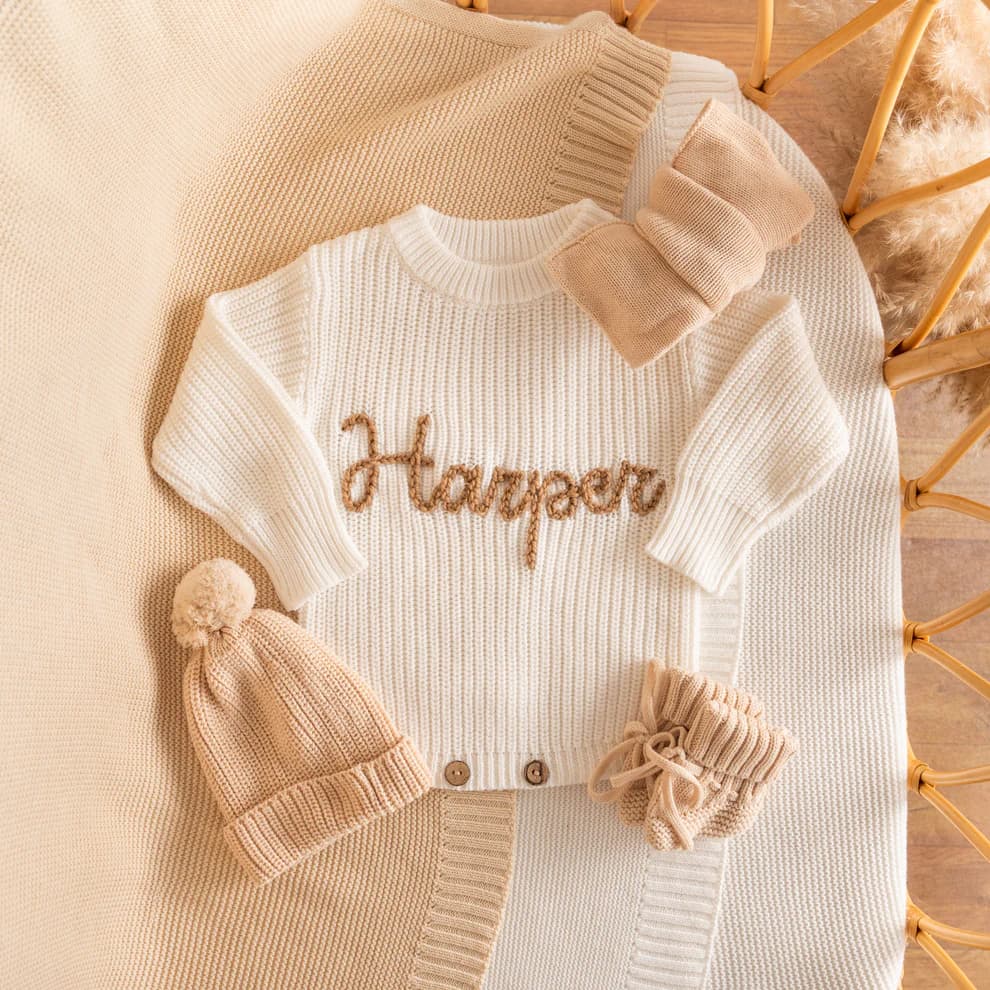
The safest way to wash a hand-embroidered baby name sweater is to turn it inside out, submerge it in cool water with a mild, bleach-free baby detergent, swirl gently without scrubbing the embroidery, and roll it inside a clean towel to remove excess water. Always air dry flat on a fresh towel away from direct heat or sunlight. Never put hand-embroidered knitwear in a tumble dryer, as high heat and tumbling shrink the knit fibers and distort the custom raised stitches.
A personalized hand-embroidered baby sweater is one of the most treasured gifts a newborn or toddler can receive. Whether it was lovingly custom-ordered for a baby shower, worn in birth announcement photos, or handed down to a younger sibling, each piece combines two distinct craft elements: a delicate knitted cotton or wool base and raised, hand-stitched yarn embroidery.
Because babies are naturally prone to milk dribbles, spit-up, formula spots, and puree spills, keeping their sweater fresh without compromising the custom stitching is a top concern for every parent. In this comprehensive care guide, we walk you through the gold-standard hand-washing routine, explain how to safely machine wash when you are pressed for time, share stain-removal secrets, and teach you how to preserve your heirloom sweater for years to come.
“Treat a hand-embroidered sweater like fine lace: give it cool water, gentle soap, zero wringing, and flat air drying. With these four steps, the embroidery stays plump and the knit keeps its shape for generations.”
At-a-Glance: Hand-Embroidered Sweater Care Cheat Sheet
Save this quick reference guide to keep nearby in your nursery or laundry room before washing:
- Water Temperature: Cool or cold (below 30°C / 86°F). Hot water shrinks knits and causes colored embroidery floss to bleed.
- Detergent: Mild liquid baby detergent, gentle wool wash (like Eucalan), or pH-neutral liquid soap. Never use bleach, optical brighteners, or chemical stain removers.
- Washing Method: Hand washing is strongly recommended. If using a machine, always place the sweater inside-out inside a zippered mesh delicates bag on the gentle cycle.
- Water Extraction: Never twist, wring, or pull. Use the clean towel-roll technique to squeeze out excess moisture safely.
- Drying Method: Lay flat on a clean dry towel or mesh drying rack, gently reshaping the sweater and lettering while damp. No tumble dryers.
- Ironing & Steaming: Inside out with a clean pressing cloth on low-to-medium heat. Never press a hot iron directly onto yarn embroidery.
- Storage: Fold flat in a breathable cotton storage bag or drawer with acid-free tissue. Never hang baby knitwear on hangers.
Why Hand-Embroidered Baby Sweaters Require Special Attention
Unlike mass-produced polyester baby clothing that can withstand aggressive cycle washing, artisanal knitwear has unique structural characteristics that require mindful handling:
- Dual Fiber Tension: The base sweater has a flexible, open knit designed to stretch over a baby's head and allow easy movement. In contrast, the hand-embroidered lettering is worked with specific thread tension. If a sweater is agitated roughly, the surrounding knit stretches while the embroidery stays taut, creating unsightly puckering.
- Raised 3D Stitch Work: Hand-embroidered name sweaters often feature chunky chain stitches, textured cursive, and delicate French knots that rise above the sweater surface. In an unshielded wash, these raised loops can catch on zippers, Velcro, buttons, or machine agitators.
- Infant Skin Safety: Infant skin is significantly thinner and more sensitive than adult skin. Heavy chemical detergents, enzymatic stain boosters, and synthetic fabric softeners leave chemical films on knitted yarn that can cause contact dermatitis or skin redness.
The Gold Standard: Step-by-Step Hand Washing Guide
Hand washing takes only 10 to 12 minutes of active time and guarantees the longest possible lifespan for your baby's sweater. Follow these six steps for spotless, worry-free results:
Step 1: Inspect and Turn the Sweater Inside Out
Before wetting the garment, turn the sweater completely inside out. This simple action shields the embroidery stitches from friction against the basin and your hands. Check the inside of the sweater for any loose yarn tails or stray snags.
Step 2: Prepare a Cool Water Bath with Gentle Detergent
Fill a thoroughly cleaned bathroom sink, laundry basin, or baby bathtub with cool or lukewarm water (around 20°C–25°C / 68°F–77°F). Add a quarter-cap of mild baby detergent or no-rinse wool wash, and stir the water with your hand until the soap is completely dissolved before submerging the garment.
Step 3: Submerge and Soak (5 to 10 Minutes)
Submerge the inside-out sweater and gently press it down with open palms so it absorbs the water evenly. Let it soak for 5 to 10 minutes. Soaking allows the gentle surfactants to loosen milk sugars and oils naturally without needing mechanical rubbing.
Step 4: Gentle Agitation Without Scrubbing
Swish the sweater slowly from side to side in the water. Never rub the embroidered front against itself, and avoid scrubbing with brushes or washcloths. If there is a concentrated spot on the collar or cuffs, gently massage the soapy water through the fibers using the pads of your fingertips.
Step 5: Rinse Thoroughly with Matching Cool Water
Drain the sudsy water from your basin. Gently press the sweater against the bottom or side of the basin to release dirty water—do not lift it while soaking wet, as the weight of the water can stretch the neckline. Refill with clean, cool water and swish until all soap residue is flushed away. Match the rinse water temperature to the wash water to prevent thermal shock to the fibers.
Step 6: The Towel-Roll Water Extraction Method
This is the most important step for preserving sweater shape. Follow this technique to remove up to 80% of the moisture without stretching a single stitch:
- 1. Lay a large, clean, dry bath towel flat on a table or clean floor.
- 2. Place the damp sweater flat on top of the towel.
- 3. Beginning at one end, roll the towel up tightly with the sweater nestled inside, like a sleeping bag roll.
- 4. Gently press down along the entire length of the rolled towel using your forearms or hands. The towel will absorb excess water safely.
- 5. Unroll the towel and lift your sweater, which will now be damp rather than dripping wet.
Can You Machine Wash a Hand-Embroidered Sweater? (The Safe Protocol)
While hand washing is ideal, busy parents with newborns and toddlers often need practical solutions. If you must use a washing machine, follow these strict safety rules to minimize risk:
- 1. Always Inside Out: Turn the sweater completely inside out so the custom embroidery is protected inside.
- 2. Use a Mesh Laundry Bag: Place the sweater into a fine-mesh zippered laundry wash bag. Do not wash loose in the drum alongside jeans, Velcro bibs, or items with exposed metal zippers.
- 3. Gentle Cycle Only: Select 'Delicates', 'Hand Wash', or 'Wool' mode on your washing machine with cold water (30°C or lower).
- 4. Low Spin Speed: Turn the spin speed down to 400 or 600 RPM. High-speed spinning (1200+ RPM) causes severe centrifugal friction and can twist embroidery threads out of alignment.
- 5. Zero Machine Drying: Even if you machine wash the cycle, NEVER place the sweater in a tumble dryer. Always remove it promptly and lay it flat to dry.
Treating Common Baby Stains: Milk, Spit-Up, Formula, and Berries
Babies and messes are inseparable. Here is how to treat common childhood spills without damaging embroidery floss or discoloring knit cotton:
- Breastmilk & Spit-Up: Fresh spit-up should be rinsed immediately from the back of the fabric using cold water. Cold water forces the proteins out of the knit, whereas hot water coagulates milk proteins, permanently bonding them to the yarn. Dab a drop of gentle liquid soap onto the area with a wet cloth.
- Baby Formula: Formula contains fats, proteins, and minerals that can leave yellow rings if allowed to dry. Pre-soak the stained zone in cool water mixed with a teaspoon of baking soda for 15 minutes before washing.
- Fruit Purees & Berries: Do not rub berry juice, as rubbing spreads the stain into adjacent stitches. Blot gently with a damp paper towel. Dab a 50/50 mixture of cool water and white distilled vinegar onto the back of the stain, then rinse thoroughly with cold water.
- Warning on Harsh Bleaches: Never use chlorine bleach, oxygen bleach boosters, or enzyme sprays containing optical brighteners on hand-embroidered sweaters. These chemicals degrade the sheen of embroidery floss and cause faded patches on dyed yarn.
Drying and Reshaping: The Secret to Like-New Lettering
Knitted fabrics have 'memory.' When wet, fibers relax and can be guided into their correct shape. This gentle reshaping process—known in the knitwear world as 'blocking'—ensures the sweater looks crisp and tailored:
- 1. Prepare the Drying Surface: Lay a fresh, dry towel or mesh drying screen in a well-ventilated room away from direct heaters or intense sunlight.
- 2. Reshape the Knit: Smooth the body of the sweater into a neat rectangle. Align the shoulder seams, straighten the sleeves, and pull the bottom ribbing gently into shape.
- 3. Re-align the Embroidery: Use clean fingertips to smooth each letter of your baby's embroidered name flat against the sweater. If the letters puckered during the wash, gently stretch the knit outward around the name to release tension.
- 4. Air Dry Naturally: Allow the sweater to dry completely (usually 12 to 24 hours depending on humidity). Flip it over halfway through to allow the back to air out.
Troubleshooting: What to Do If a Thread Snags or Puckers
Accidents happen—a baby fingernail, a pet claw, or a toy clip might pull on a stitch. Here is how to fix common knitwear issues at home:
- Rule #1: Never Cut a Pulled Thread: If a yarn loop pulls up from the embroidery or base knit, NEVER cut it with scissors. Cutting the loop will cause the entire letter or knitted row to unravel. Instead, take a blunt tapestry needle or tiny crochet hook, insert it from the inside of the sweater directly behind the snag, and gently pull the loop through to the inside.
- Smoothing Puckered Stitches: If the lettering looks slightly wavy or crinkled after drying, turn the sweater inside out. Place a clean cotton pressing cloth (or thin pillowcase) over the back of the embroidery. Set your iron to the lowest steam setting and gently press for 3 to 5 seconds. The steam relaxes the thread tension without squashing the 3D texture.
- De-pilling Gently: High-friction areas under the arms may develop small pills over time. Use an artisanal sweater comb or manual cashmere comb to gently shave away fuzz. Avoid aggressive electric de-pillers near the embroidered name.
Preserving Your Baby's Name Sweater as a Family Keepsake
Once your little one outgrows their personalized sweater, you will likely want to save it as a cherished memory box keepsake for graduation, weddings, or the next generation. Proper storage prevents moth damage, yellowing, and fiber decay:
- Wash Before Storing: Always wash and dry the sweater thoroughly before putting it into storage. Invisible milk residues and skin oils attract moths and oxidize into yellow stains over time.
- Use Breathable Cotton & Acid-Free Paper: Never store heirloom knitwear in airtight plastic boxes or vacuum seal bags. Natural fibers need to breathe, and trapped moisture can foster mildew. Instead, wrap the sweater in acid-free tissue paper and store it inside a breathable cotton or canvas keepsake pouch.
- Always Store Folded: Never hang knitted sweaters on hangers for long-term storage. Gravity will pull on the shoulders, creating permanent hanger bumps and stretching the neck out of proportion.
- Natural Pest Protection: Place natural red cedar balls or dried lavender sachets in the storage drawer to naturally deter moths without synthetic chemical mothball odors.
Frequently Asked Questions About Embroidered Baby Sweaters
Can I put a hand-embroidered baby sweater in the dryer on low heat?
No. Even on the lowest delicate heat setting, tumble drying creates friction that rubs the yarn fuzzy and can shrink the base sweater unevenly against the embroidery. Always allow the sweater to air dry flat on a towel.
What happens if someone accidentally washed it in hot water?
Hot water causes cotton and wool fibers to contract and shrink, while synthetic embroidery threads may stay their original size, resulting in heavy puckering. If this happens, re-soak the garment in cool water mixed with a tablespoon of gentle hair conditioner for 15 minutes. The conditioner relaxes the knit fibers so you can gently stretch the sweater back to its original dimensions before laying it flat to dry.
How often should a personalized name sweater be washed?
Because babies wear onesies or undershirts beneath their sweaters, you do not need to wash the sweater after every wear. Unless it has direct food spills or spit-up, spot cleaning minor marks and airing the sweater out between wears will keep it in peak condition for months.
Can I use fabric softener on baby knitwear?
It is best to avoid commercial liquid fabric softeners and dryer sheets on embroidered sweaters. Fabric softeners deposit a waxy chemical coating that coats the yarn, reduces breathability, dulls the luster of embroidery threads, and can irritate delicate newborn skin.
What should I do if the embroidery thread bleeds?
At Knitty Petit, we use colorfast, premium-grade embroidery yarn tested for dye stability. However, if you are washing a sweater from an unknown source and see color in the water, immediately rinse with cold running water until clear. Adding a splash of distilled white vinegar to the rinse water helps set dye and neutralizes mineral deposits.
Keep Your Keepsakes Beautiful with Knitty Petit
At Knitty Petit, every sweater is individually crafted with high-density, cloud-soft knit cotton and hand-embroidered with love in our boutique studio. If you are planning an upcoming baby shower, newborn announcement, or first birthday gift, explore our handcrafted custom name sweater collection to pick your favorite colors, fonts, and floral accents.
For more gift planning advice, read our comprehensive guide on Baby Shower Gift Ideas: What to Buy and When to Personalize to coordinate sizing, timing, and registry etiquette seamlessly.
Sources and Textile Care Standards
Care recommendations and fiber maintenance protocols in this guide reflect established standards from The Woolmark Company's Wool Care Guide and textile preservation guidelines published by the American Institute for Conservation (AIC) Textile Specialty Group. Knitty Petit care instructions are editorial recommendations tailored specifically to our hand-embroidered knitwear collection. Always review specific care labels on your garment before washing.